Shocks and struts do more than make the ride comfortable. Their job is to control suspension movement and keep the tires in steady contact with the road. When they wear out, the change usually happens slowly, so drivers get used to the way the vehicle feels.
That is why worn shocks and struts can stay unnoticed for a long time. The car still drives, but it starts bouncing more, leaning harder in turns, and wearing tires in patterns that should not be there. These seven signs are worth noticing.
1. The Vehicle Keeps Bouncing After a Bump
A good shock or strut controls the spring after the wheel hits a bump. The suspension moves, then settles quickly.
When the damper is worn, the body keeps moving after the bump is already behind you. You might feel two or three extra up-and-down motions after crossing a dip, speed hump, or rough patch of road. At our shop, a road test usually makes this easier to identify than simply looking at the suspension while the vehicle is parked.
2. The Front End Dives Hard When You Brake
Some forward weight transfer during braking is normal. The problem is when the nose drops much farther than it used to or takes too long to settle.
Weak front struts or shocks allow excessive suspension movement when you brake. That can make the vehicle feel less controlled during a hard stop, especially on rough pavement. We still check the brakes and suspension together because worn control arm bushings or other loose parts can add to the same feeling.
3. The Vehicle Leans More in Corners
Shocks and struts help control how quickly the body moves when you turn. As they wear, the vehicle can lean farther and feel less planted in corners.
Drivers often describe this as a loose or floating feeling. You turn the wheel, and the body seems to keep moving after the steering input is already finished. That does not always mean the dampers are the only problem, so we also check sway bar links, bushings, tires, and other suspension parts.
4. Your Tires Are Developing Cupped Wear
Worn shocks and struts can let the tire bounce against the road instead of maintaining steady pressure on the pavement. Over time, that can create scalloped or cupped areas around the tread.
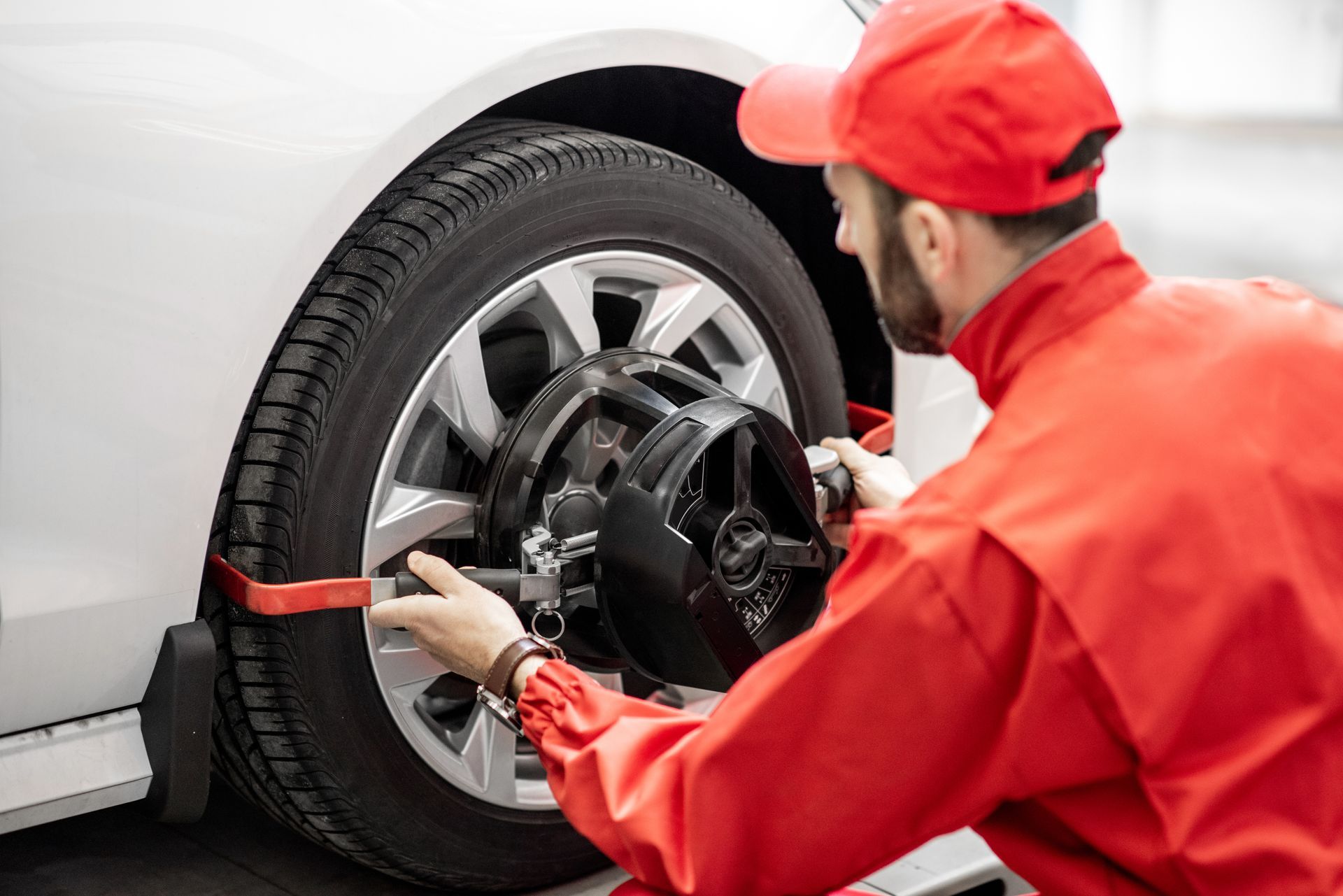
You can sometimes feel the pattern by running your hand across the tire. The tread has alternating high and low spots instead of wearing evenly. During an inspection, we check wheel balance,
alignment, suspension looseness, and tire condition too, because cupping can have more than one cause.
5. You See Fluid Leaking Down the Shock or Strut
Shocks and struts contain hydraulic fluid. A small film of residue does not always mean the component has failed, but fluid running down the body is a stronger sign that the internal seal is no longer holding properly.
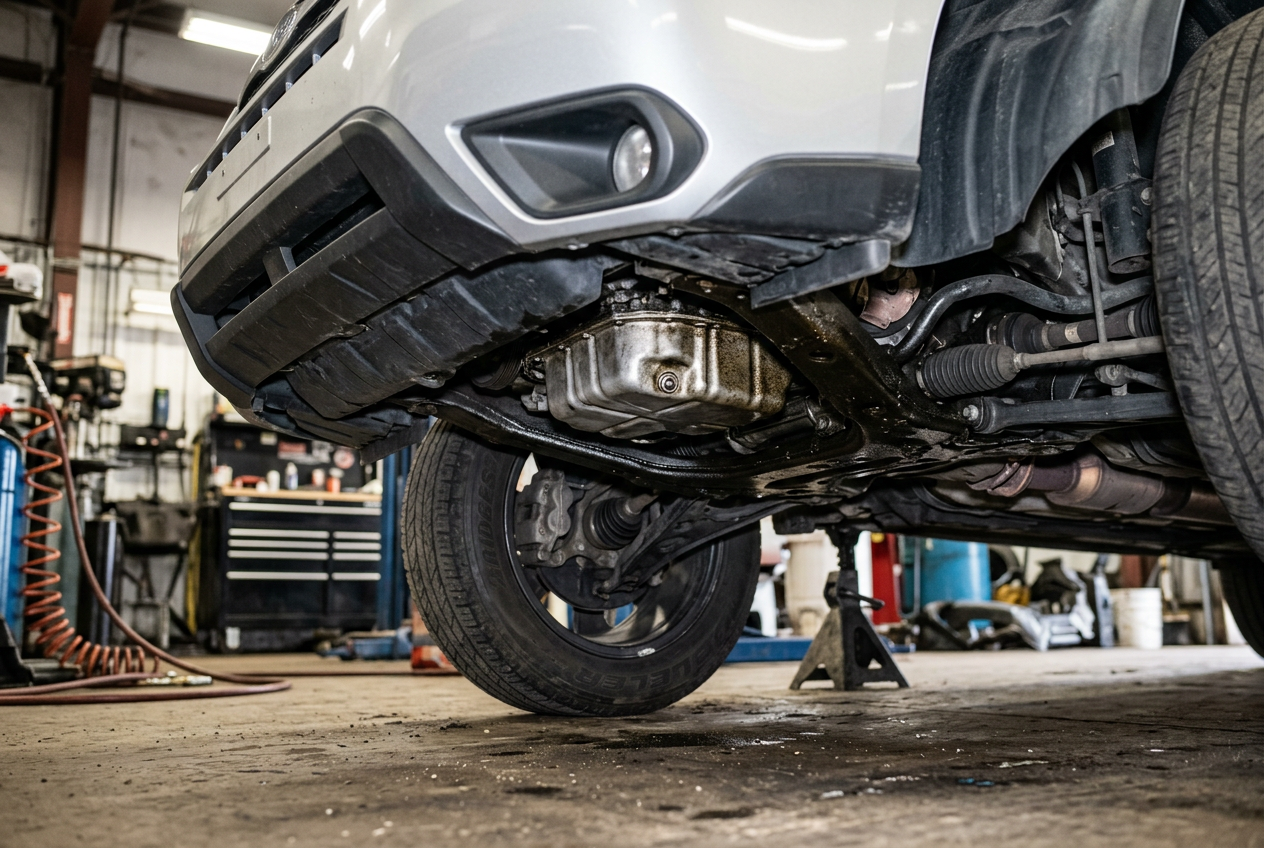
Once enough fluid escapes, the damper loses some of its ability to control spring movement. We also look for dents, damaged shafts, broken mounts, and corrosion while checking the assembly. A dry strut can still be worn internally, so leakage is only one part of the diagnosis.
6. The Vehicle Feels Unstable on Rough Roads
A worn suspension becomes much easier to notice on uneven roads. The vehicle can wander, move side to side, or feel like the tires are skipping over broken pavement.
You might also notice more steering correction at highway speed after hitting a rough section of road. That is because the dampers are not controlling wheel movement as well as they should. If the steering feels loose all the time, we also check tie rods, ball joints, wheel bearings, and alignment before blaming the shocks or struts alone.
7. You Hear Clunks From the Strut or Shock Area
A worn shock or strut can make noise, but the sound often comes from the mounting parts around it.
Upper strut mounts, bushings, bearings, and mounting hardware can clunk over bumps or pop while turning. A broken spring or worn sway bar link can sound almost identical from inside the vehicle. We try to reproduce the noise, then check for actual movement before recommending parts.
Do Not Replace Shocks or Struts Based on Mileage Alone
There is no single mileage where every shock or strut needs replacement. Some wear sooner because of rough roads, heavy loads, towing, or poor road conditions, while others stay in good shape much longer.
Regular maintenance gives us a chance to track the suspension before the change becomes obvious. If the vehicle is bouncing, leaning, cupping tires, or losing control over rough pavement, the condition of the dampers matters more than the number on the odometer.
Get Shock And Strut Service In Baltimore, MD, With Orem's Garage
If your vehicle is bouncing after bumps, leaning in turns, wearing tires unevenly, or making suspension noise,
Orem's Garage in Baltimore, MD, can inspect the shocks, struts, mounts, springs, and related suspension components.
Schedule a suspension check and find out which parts are actually worn before poor control starts feeling normal.